

Packing for a Greek sailing holiday is different from packing for any other kind of trip. Space on a yacht is genuinely limited, hard suitcases are a problem, and the combination of sun, salt water, and warm evenings ashore calls for a very specific mix of clothing and kit. Pack too much and your cabin feels cramped from day one. Pack too little and you are hunting for sunscreen in a small harbor shop at twice the price. This guide to what to pack for a Greek sailing holiday covers everything you need, category by category, so you arrive prepared and travel light.
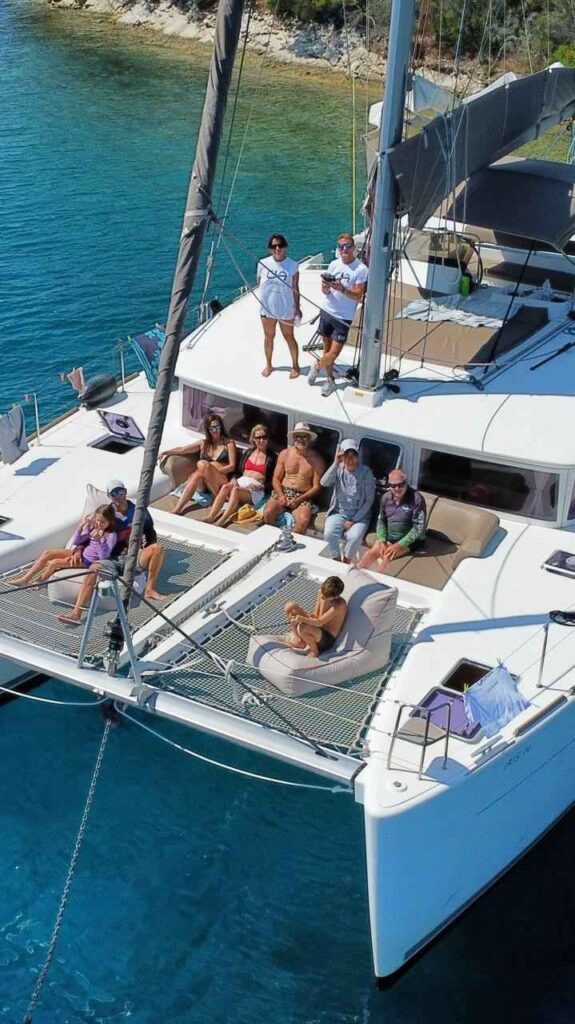
The Golden Rule: Soft Bags Only
Before thinking about what to pack, think about what to pack it in. Hard suitcases do not work on a yacht. They cannot be stored under berths, they take up valuable floor space in the cabin, and they make life difficult for everyone on board. Always travel with a soft duffel bag or a collapsible travel bag that can be squashed flat once you have unpacked. In addition, a small dry bag – around 5 to 10 liters – is worth bringing for dinghy trips ashore. Phones, wallets, and cameras stay dry inside one of these, which matters every time you step into the tender to reach a beach or village.
CAYAsail’s FAQs page covers packing advice and everything else first-time guests usually want to know before arriving at the marina in Lefkada.
Clothing: Less Than You Think
A week on a sailing catamaran in the Greek islands is, for most of the day, a swimwear situation. You will spend mornings on deck in a swimsuit, afternoons in the water or sunbathing, and evenings ashore in something simple and casual. The dress code across the Ionian is relaxed – smart casual is more than enough for the best waterfront restaurants in Fiskardo or Syvota.
For a seven-night trip, a practical clothing list looks something like this. Bring three or four swimsuits – having two or three dry at any given time makes a real difference over a full week in the water. Pack four or five lightweight t-shirts and two or three pairs of shorts. Add one or two casual evening outfits for dinners ashore – a light dress, linen shirt, or similar. Furthermore, a thin windbreaker or light fleece is worth including even in July and August, since evenings on the water can be cooler than expected, and the Maistros wind picks up in the afternoon. One pair of flip-flops and one pair of flat, casual shoes for evenings ashore covers footwear for the week.
Also worth noting: all clothing should be quick-drying and lightweight. Cotton and linen work well in the heat and dry fast after an accidental splash or a swim. Leave anything that needs ironing or dry cleaning at home – it has no place on a boat.
Footwear: What Works on a Boat
Deck shoes with non-marking, light-colored soles are the ideal footwear for life on board. They grip well on wet surfaces and do not scuff the deck. If you do not own deck shoes, flat rubber-soled sandals or trainers work as a practical alternative. In particular, avoid heeled shoes entirely – they damage the deck surface and make getting on and off the boat genuinely hazardous. Flip-flops are fine for going ashore and relaxing on deck, but not for moving around the boat while sailing.
Sun Protection: Bring More Than You Think
Sun protection on a sailing holiday is not optional – it is the most important category on the packing list. You are on the water for most of the day, and the reflection off the sea significantly increases UV exposure compared to a beach holiday. Always bring SPF 50+ sunscreen, and bring more than you think you will need. Sunscreen is available in Greece but it is expensive, especially in small harbor shops. In addition, reef-safe formulas are always preferable near coral and marine life.
Also pack a wide-brimmed hat or cap – ideally one with a chin strap or a close fit, since hats have a habit of departing in the afternoon breeze. Polarized sunglasses are worth the investment for sailing; they cut the glare off the water significantly and make hours on deck far more comfortable. Lip balm with SPF is also easy to forget and genuinely useful when the wind is up. Finally, after-sun lotion or aloe vera gel is worth including for the evenings, particularly in the first few days before you have built up any tan.
Toiletries and Medication
Keep toiletries minimal. Shampoo, conditioner, shower gel, and deodorant are all available in Greece, though prices in marina towns are higher than supermarkets. If you have specific brand preferences or longer hair that needs particular products, bring your own. Sea and wind take a toll on hair over the course of a week, so conditioner is worth prioritizing.
For medication, the most important item for many first-time sailors is seasickness tablets. Motion sickness on a catamaran is generally mild compared to a monohull – catamarans are significantly more stable on the water – but it is always worth having tablets on board in case conditions are rougher than expected. Also pack a basic personal first aid kit: antihistamine cream for insect bites, antiseptic, painkillers, and any prescription medication you take regularly. Always carry prescription medication in your hand luggage rather than in checked bags.
Electronics and Extras
Space and power are both limited on a yacht, so keep electronics to a minimum. A smartphone and a compact camera or GoPro cover most people’s needs for the week. A GoPro with an underwater housing is particularly well suited to a sailing holiday – it handles the water, the salt spray, and the dinghy rides without any anxiety. Also bring a portable power bank for charging during the day, and check whether your charger needs a European adapter plug before you travel.
Additionally, a good book or two is always worth the small amount of space it takes up. Long, calm afternoons at anchor are one of the great pleasures of an Ionian sailing week, and having something to read in the cockpit while the boat swings gently in a quiet bay is hard to beat. A reusable water bottle is also worth packing – hydration matters more than most people expect on a full day in the sun and sea air.
What to Leave at Home
A few things are worth leaving behind entirely. Hairdryers and hair straighteners rarely work on a yacht – the power supply is not suited to high-wattage appliances and marina shore power is not always available. Embrace the natural look for the week. Expensive jewelry is also best left at home – salt water, boat cleats, and swimming are not kind to fine jewelry, and the relaxed dress code of the Ionian means you will not miss it.
Also leave behind anything bulky, fragile, or difficult to store. The cabin on a Lagoon 450F catamaran is comfortable and well-designed, but storage is finite. The lighter you pack, the more enjoyable your week will be – both in terms of space on board and the ease of getting on and off the boat at every stop along the South Ionian route.
What CAYAsail Provides
On a crewed, all-inclusive charter like CAYAsail, several items that would otherwise need to be on your packing list are already taken care of. Linen and towels are provided on board, so you do not need to pack either. Snorkeling equipment and two SUPs are included for all guests, so there is no need to bring your own water toys. WiFi is available on board, and the onboard chef handles all provisioning – so no supermarket run on arrival day and no need to pack food or drink for the week.
In short, a Greek sailing holiday with a fully crewed catamaran is one of the most packing-friendly holidays you can take. The essentials are covered, the cabin is comfortable, and the week takes care of itself from the moment you arrive. To find out more about what is included or to start planning your trip, get in touch with the CAYAsail team – or take a look at the cabin charter option on cayasail.com if you are travelling as a couple and want a flexible way to book.